ANDREW MYNARSKI, 1916-1944
Lancaster bomber crew member/ Czlonek zalogi bombowca Lancaster
POLSKO KANADYJSKI BOHATER
"Zawsze bede wierzyl ze Bog ocalil mnie po to, abym mogl opowiedziec swiatu co widzialem
i jak dzielnym byl czlowiek, ktory oddal wlasne zycie by ratowac przyjaciela..." Pat Brophy - ocalaly czlonek zalogi
A POLISH CANADIAN HERO
"I will always believe that a divine providence intervened to save me because of what I has seen,
so that the world might know of a gallant man who laid down his life for a friend..." Pat Brophy - survivour crew member
"Zawsze bede wierzyl ze Bog ocalil mnie po to, abym mogl opowiedziec swiatu co widzialem
i jak dzielnym byl czlowiek, ktory oddal wlasne zycie by ratowac przyjaciela..." Pat Brophy - ocalaly czlonek zalogi
A POLISH CANADIAN HERO
"I will always believe that a divine providence intervened to save me because of what I has seen,
so that the world might know of a gallant man who laid down his life for a friend..." Pat Brophy - survivour crew member

Andrew Mynarski 1916-1944
|

Lancaster KB-726 VRA - June 13, 1944
|
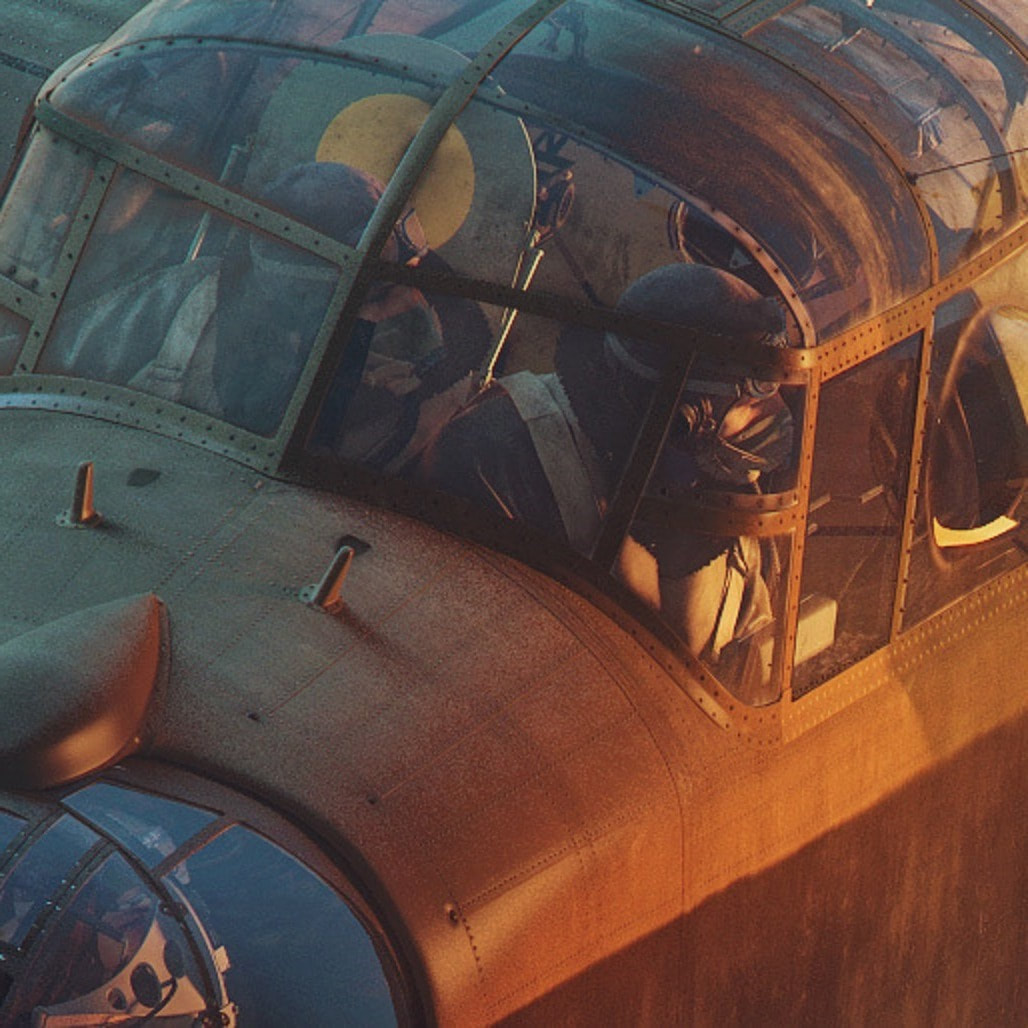
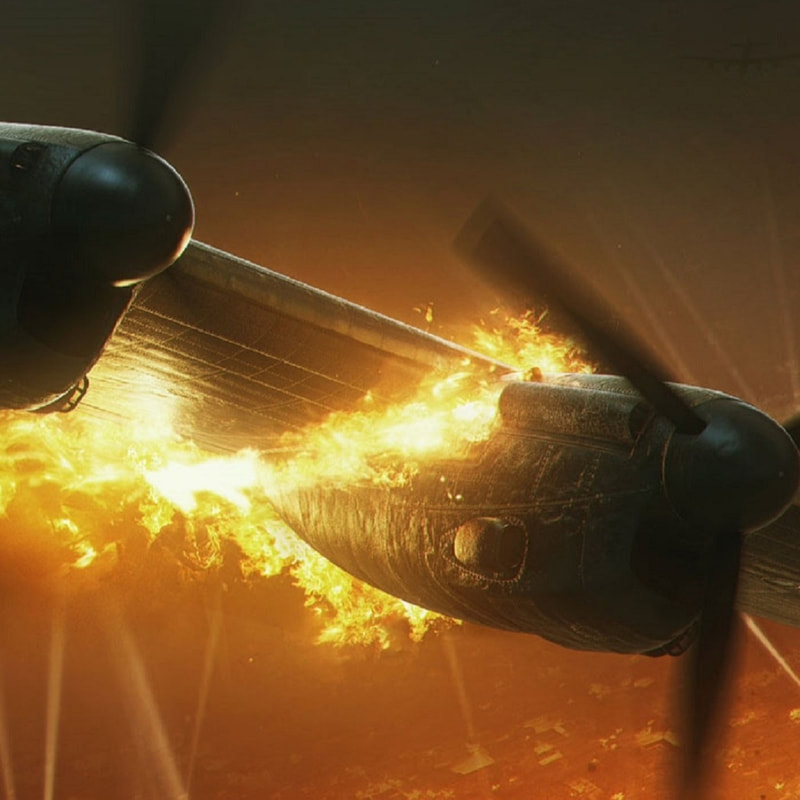
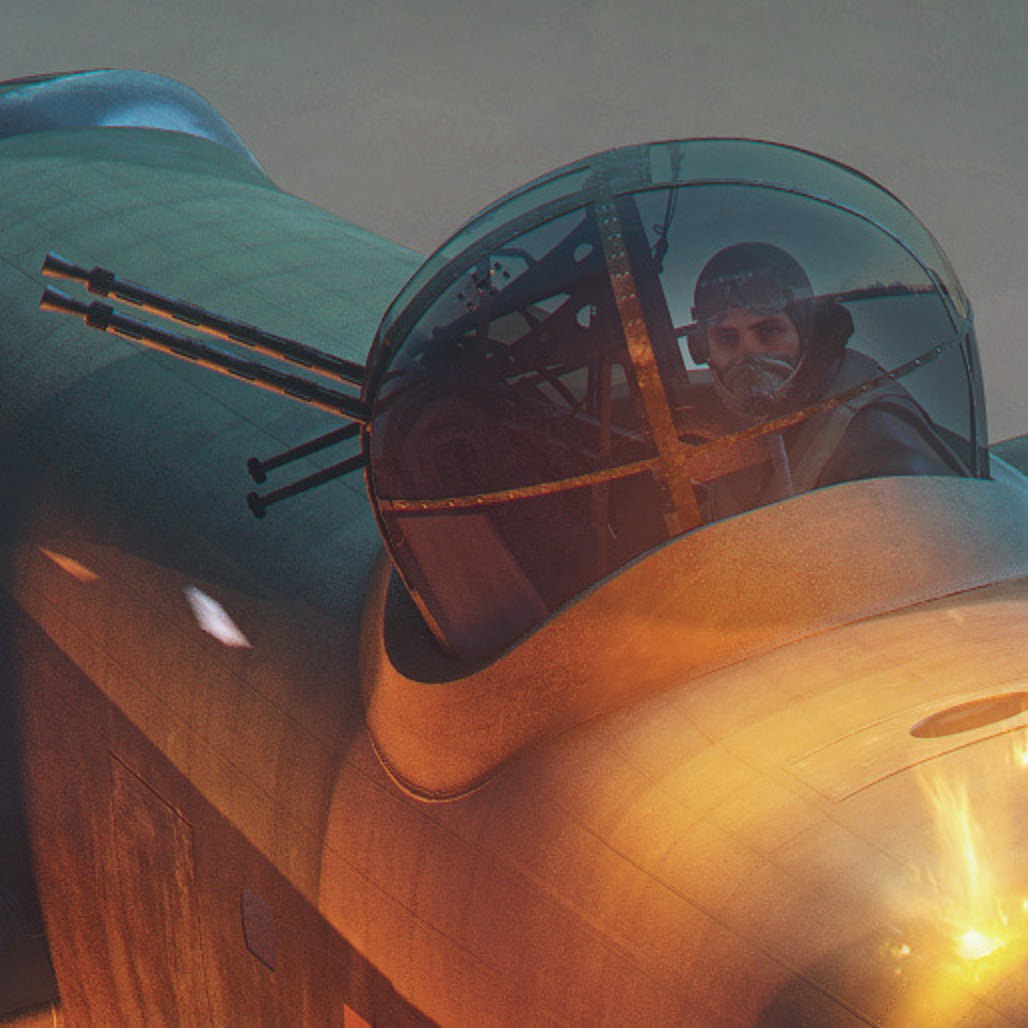


"Plonacy Lancaster Mynarskiego, w swoim tragicznym ostatnim locie" - grafika komputerowa polskiego artysty Piotra Forkasiewicza
"The Mynarski's burning Lancaster in her tragic last flight" - digital images by Polish artist Piotr Forkasiewicz
|
ANDREW MYNARSKI 1916-1944, Kanadyjczyk pol. pochodzenia, Czlonek zalogi bombowca Lancaster Mk-X, KB-726 VR-A
Odznaczony Krzyzem Victoria najwyzszym i najbardziej prestizowym odznaczeniem dla zolnierskiej odwagi i szlachetnosci w obliczu walki z wrogiem, przyznawany Brytyjczykom i zolnierzom Sil Zbrojnych Wspolnoty Commonwealth. Mynarski byl pierwszym czlonkiem Kanadyjskich Sil Powietrznych, ktory otrzymal to odznaczenie podczas II Wojny Swiatowej... Andrew Charles Mynarski urodzil sie 14 pazdziernika 1916 r w Winnipegu (Manitoba, Kanada) w rodzinie polskich emigrantow. Mial piecioro rodzenstwa; dwoch braci i trzy siostry. W Winnipegu uczeszczal do szkoly podstawowej im. Krola Edwarda i Isaaca Newtona, a pozniej do Technikum Sw. Jana. Po skonczeniu 16 lat, gdy umarl ojciec, pomagal utrzymywac rodzine poprzez prace w sklepie kusnierskim, gdzie pracowal przez 4 lata. Potem budowal meble i modele samolotow w piwnicznym warsztacie, ktory sam urzadzil. W listopadzie 1941 (Druga Wojna Swiatowa) wstapil do Kanadyjskich Sil Powietrznych (RCAF). Przeszedl szkolenie w Calgary, Edmonton (Alberta), a takze w McDonald (Manitoba), ktore zakonczyl jako strzelec bombowca, tuz przed ukonczeniem 25 lat. Wyslany zostal do Europy, na wojenny front, w grudniu 1942. Mynarski rozpoczal swoja sluzbe w Anglii od przydzialu do 9 Dywizjonu Kanadyjskich Sil Powietrznych (RCAF) w pazdzierniku 1943. W marcu 1944 przydzielony zostal do 419 Dywizjonu RCAF o nazwie Los. Zastapil tam innego "gornego strzelca" w zalodze bombowca Lancaster. Z zaloga ta, jego imie zwiaze sie na zawsze. Dzien przed slawna Inwazja w Normandii (D-Day), 5 czerwca 1944, zaloga Mynarskiego otrzymala nowy, wyprodukowany w Kanadzie bombowiec Lancaster Mk-X z numerem bocznym KB-726 VR-A. Kilka dni pozniej, 11 czerwca, 1944 Mynarski awansowal, otrzymujac tytul "Pilot Officer"... W nocy 12 czerwca zaloga miala wystartowac do swojej czwartej, misji na nowym bombowcu. Celem bylo zbombardowanie terenow kolejowych w miejscowosci Cambrai we Francji. Byla to trzynasta misja Mynarskiego z obecna zaloga, a nad celem we Francji Lancaster mial sie znalezc w piatek trzynastego czerwca.Czekajac na wylot zaloga rozmawiala o feralnych trzynastkach zwiazanych z ich misja. Andrew Mynarski znalazl na trawie w poblizu samolotu czterolistna koniczyne, ktora powinna przyniesc szczescie. Podarowal ja, swojemu najblizszemu koledze z zalogi o imieniu Pat Brophy, ktory byl strzelcem w ogonowej wiezy Lancastera. Pat usmiechajac sie, wrzucil listek do swojego helmu. (...) Wkrotce po przelocie nad francuskim wybrzezem, Lancaster dostal sie na krotko w swiatla poteznych reflektorow niemieckiej obrony przeciw lotniczej. Po kilku udanych manewrach, bombowiec zatopil sie w ciemnosciach ponownie. Przy obnizaniu pulapu do poziomu z ktorego mialo nastapic bombardowanie, Lancaster zostal nagle zaatakowany od tylu przez niemiecki Ju-88. Seria z jego dzialek pomknela w strone bombowca. Nastapily trzy eksplozje; oba silniki po lewej stronie stanely w ogniu. Trzecia eksplozja w ogonowej czesci kadluba miedzy gorna i ogonowa wiezyczka zniszczyla hydrauliczne przewody sterujace wiezyczkami a wydostajacy sie z nich olej natychmiast zaczal sie palic, powodujac pozar w czesci ogonowej. Kapitan Art de Bryne dal rozkaz zalodze do opuszczenia samolotu... Pat Brophy, strzelec w ogonowej wiezy rozpoczal wlasna ewakuacje. Aby wydostac sie z obrotowej, wiezy musial on wyprostowac ja do pozycji wyjsciowej, wzdluz kadluba. Tylko taka pozycja ustawienia umozliwiala otworzenie malych drzwiczek. Po wydostaniu sie z wiezy, strzelec powinien zalozyc swoj spadochron i wyskoczyc glownymi drzwiami, w ogonie , po prawej stronie. (Ogonowi strzelcy przechowywali zawsze swoj spadochron na zewnatrz wiezyczki strzelniczej, ze wzgledu na bardzo malo miejsca wewnatrz samej wiezy). Na nieszczescie hydrauliczny system obracajacy wieze zostal zniszczony i wieza zostala unieruchomiona w bocznym ustawieniu. Proba obrocenia jej przy pomocy recznej korby skonczyla sie niepowodzeniem jako ze zostala ona takze uszkodzona. Przez czesciowo odsuniete drzwiczki udaje sie Patowi jedynie przyciagnac do siebie swoj spadochron. Unieruchomiony i otoczony plomieniami nie widzi zadnej drogi ratunku. W tym momencie opuszcza swoja gorna wiezyczke strzelecka Andrew Mynarski i kieruje sie do tylnych drzwi, aby ratowac sie skokiem w nocna otchlan... Oto jak wspomina te dramatyczne chwile sam Pat Brophy: " (...) Zobaczylem jak Andy wyslizguje sie ze swojej gornej wiezyczki i przedostaje do tylnego wyjscia. Byl jakies 5 metrow ode mnie. Otworzyl drzwi i wlasnie mial wyskoczyc, gdy dostrzegl mnie poprzez plastikowa szybe otaczajaca moje stanowisko strzelnicze w ogonie Lancastera. Jedno spojrzenie wystarczylo mu aby zdac sobie sprawe z tego ze jestem w potrzasku. Natychmiast odstapil od drzwi, ktore byly jego droga do ratunku i zaczal przedostawac sie w moim kierunku. Samolotem trzeslo we wszystkie strony... Poniewaz w tylnej czesci Lancastera jest naprawde niewiele miejsca, Andy musial zaczac sie czolgac. Na rekach i kolanach przeczolgiwal sie poprzez rozpalony olej z hydraulicznego systemu zasilania. Gdy dotarl do mnie, jego mundur i spadochron juz czesciowo palil sie. Krzyczalem ze jest beznadziejnie i prosilem aby wracal. Andy wydawal sie absolutnie nie zwracac uwagi na wlasna sytuacje; poparzenia i narastajace niebezpieczenstwo. Chwycil przeciw-pozarowa siekierke wiszaca w poblizu i zaczal rozbijac przejscie do mojej wiezyczki strzelniczej. Potem probowal golymi rekami rozginac to przejcie. Bez rezultatu. Andy byl w ogniu od pasa w dol. Patrzac na niego, niemal zapomnnialem o wszystkim co dzieje sie dookola. Poprzez gwizdzacy wiatr i warkot dwoch pracujacych jeszcze silnikow krzyczalem: Wracaj! Wyskakuj!. Mijaly cenne sekundy. Gdy po raz kolejny krzyknalem, Andy jakby zrozumial ze jest bezsilny sposcil glowe jakby sie wstydzil tego, ze musi mnie zostawic, jakby wstydzil sie tego ze oddane serce i odwaga nie wystarczaja aby mnie uratowac... W tylnej czesci kadluba nie ma wystarczajaco duzo miejsca aby sie odwrocic. Andy musial wyczolgac sie tylem - ponownie przez plonacy olej hydrauliczny. Nawet na moment nie sposcil ze mnie wzroku, na jego twarzy widac bylo milczacy bol. Gdy dodarl do ratunkowego wyjscia, powoli wstal. Przyjal postawe bacznosc i stojac w plonacym mundurze oddal mi salut. W tej samej chwili, moment przed tym jak wyskoczyl powiedzial cos. I choc nie moglem tego uslyszec wiem, ze bylo to: "Dobranoc Przyjacielu" (...)". Po tym jak Mynarski wyskoczyl, Pat Brophy zostal w pedzacym ku ziemi bombowcu sam. W luku Lancastera bylo piec ton materialu wybuchowego. Pat, modlil sie i czekal na ostateczne zderzenie z ziemia. Lancaster schodzil w dol w statecznym slizgu. Uderzyl lewym skrzydlem w masywne drzewo i obrocil sie wokolo. Dwie z dwudziestu bomb bedacych na pokladzie wybuchly zaraz potem. Kadlub zostal rozerwany, a czesc ogonowa odrzucona na jakies 20 metrow zatrzymala sie na innym drzewie. Tylna wiezyczka strzelnicza byla rozlupana, a Pat ... uwolniony z niej, caly i bez wiekszych obrazen. Na jego rozbitym zegarku, wskazowki zatrzymaly sie trzynascie minut po polnocy. Byl piatek 13 czerwca 1944. Z wlasnego helmu ktory podniosl z ziemi wypadla cztero-listna koniczyna. Siedmio osobowa zaloga Lancastera KB 726 byla na ziemi. Niestety, Andrew Mynarski nie zyl... Gdy wyladowal na swoim spadochronie byl jeszcze przytomny, ale jego mundur wciaz sie palil. Francuscy farmerzy zabrali go do lekarza aczkolwiek rozlegle poparzenia nie pozwolily na przezycie. Pochowany zostal na miejscowym cmentarzu w Meharicourt (Francja). Czterech innych czlonkow zalogi zostalo ukrytych przez Francuzow i przedostalo sie do Anglii wkrotce po katastrofie. Dwoch pozostalych zostalo schwytanych przez Niemcow i do konca wojny przebywali oni w internowaniu. Uwolnieni zostali przez oddzialy Amerykanskie. Pat Brophy ponownie spotkal swojego dowodce z Lancastera, Arta de Breyne dopiero w 1945. Opowiedzial jemu i innym co dokladnie wydarzylo sie tragicznej czerwcowej nocy '44. Art de Breyne zarekomendowal Andrew Mynarskiego do odznaczenia. Dowodctwo Kanadyjskich (RCAF) i Brytyjskich Sil Powietrznych (RAF) zadecydowalo o przyznaniu Andrew Mynarskiemu Krzyza Victorii - najwyzszego odznaczenia za walecznosc i szlachetnosc na polu walki. Odznaczenie zostalo wreczone matce, Stanislawie Mynarskiej przez gubernatora prowincji Manitoba, J.A. McWilliamsa 12 grudnia 1946r. |
ANDREW MYNARSKI 1916-1944, Polish Canadian airman,
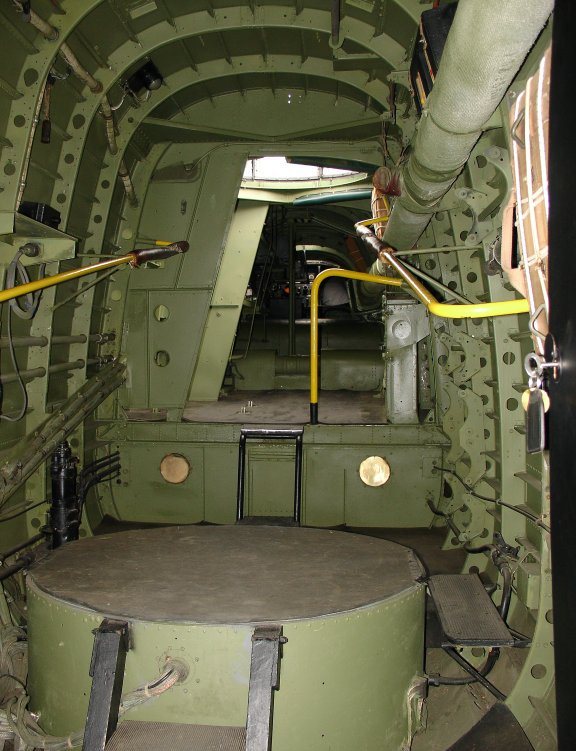
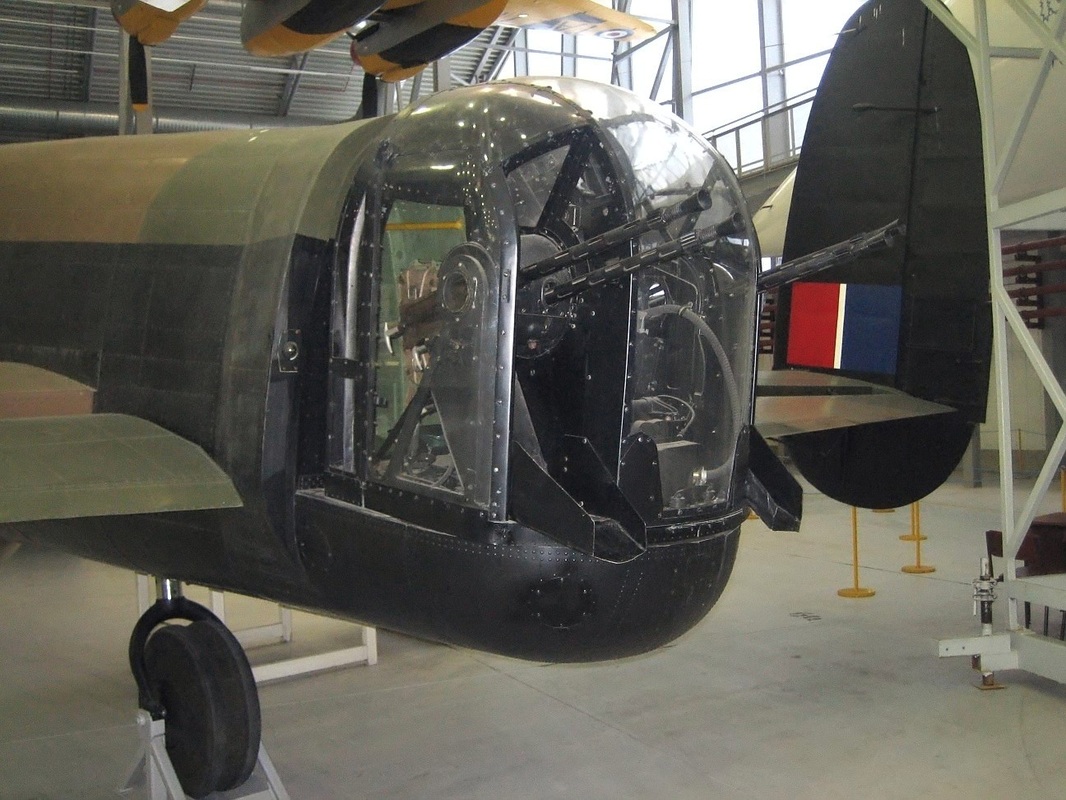
Crew member of the Lancaster Mk-X, KB-726 VR-A Awarded with the Victoria Cross, the highest and most prestigious award for gallantry in the face of the enemy that can be awarded to British and Commonwealth forces. Mynarski was the first member of the R.C.A.F. to be decorated with the Victoria Cross in WWII... Andrew Charles Mynarski was born in Winnipeg, Manitoba on 14 Oct. 1916, the son of recent Polish immigrants. Known as Andy to his close friends, he had five other siblings, two brothers and three sisters. Mynarski was educated at King Edward and Isaac Newton Elementary Schools, later graduating from St. John's Technical School. To help support his family after his father's death, at the age of 16, he worked as a chamois cutter. In 1940, Mynarski joined the Royal Winnipeg Rifles, a militia unit, but only served a short time before enlisting in the Royal Canadian Air Force (RCAF). After a series of transfers through operational training units, he joined Flying Officer Art de Breyne's crew as the mid-upper gunner in 419 "Moose" Squadron, based at RAF Middleton St. George, Yorkshire England. On June 5, 1944, just before the Invasion of Normandy (D-Day), de Bryne's crew received Canadian-built four engine heavy bomber Avro Lancaster Mk-X, #KB726, coded "VR-A". A few days later they took off on their one of the first/ last raid mission on this new plane... On the night of June 12, 1944 the crew began the new Lanc's fourth mission - their target: the rail marshalling yards at Cambrai, France. It would be the 13th mission of the crew. They would be over the target on Friday the thirteenth... While waiting to go, the crew couldn't help but think of these omens related to the number "13". Andrew found a four leaf clover in the grass by the planes. He insisted that his closest buddy in the crew, tail gunner Pat Brophy, should take it. Pat put the leaf into his helmet... Shortly after crossing the French coast, the Lancaster was briefly coned by enemy searchlights. After some evasive maneuvers, they were in the safety of darkness again. They began descending to the level of their planned attack when a Ju-88 came in from astern. It's cannons blazed from below. Three explosions tore the aircraft. Both port engines were knocked out and began to flame. The third burst tore into the aircraft between the mid-upper and rear turrets starting a fire. Hydraulic lines to the rear turret were severed and the fluid ignited, turning the rear of the fuselage into an inferno. The captain, Art de Bryne gave the order to bail out... Pat Brophy, the tail gunner proceeded to exit his turret and bail out. To get out, Pat had to straighten his turret in line with the fuselage, go through the doors, collect his parachute and jump from the fuselage door on the starboard (right) side. Tail gunners stored their parachutes in the fuselage because there wasn't the room in the confines of the rear turret to wear or store one. Unfortunately that third round had split the hydraulic line feeding his turret, it wouldn't move and flames where sweeping down towards him. The alternate route was to rotate the turret with the inner doors facing to the outside and to bail out backwards. Pat managed to open his doors to the inside of the aircraft, enough to grab his parachute and clip it on. He would then manually rotate the turret with a hand crank as far he could to the side, open the doors and bail out into the night. To his horror, the handle broke off. He was now trapped in a burning aircraft heading for the ground. At that time Mynarski left his post at the mid upper turret and began to make his way to the rear escape door... The remainder of this encounter is best left up to Pat Brophy himself: "(...) Then I saw Andy. He had slid down from the mid-upper turret and made his way back to the rear escape hatch, about 15 feet from me, having received the same P signal to bail out from the skipper. He opened the door and was just about to jump when he glanced around and spotted me through the plexiglass part of my turret. One look told him I was trapped.Instantly, he turned away from the hatch - his doorway to safety - and started towards me. All this time the airplane was lurching drunkenly as Art tried to keep it on an even keel without instruments... Andy had to climb over the Elsan chemical toilet and crawl over the tailplane spar, as there is no room at that part of the fuselage. These cramped conditions forced him to crawl on his hands and knees - straight through the blazing hydraulic oil. By the time he reached my position in the tail, his uniform and parachute were on fire. I shook my head; it was hopeless. 'Don't try!' I shouted, and waved him away. Andy didn't seem to notice. Completely ignoring his own condition in the flames, he grabbed a fire axe and tried to smash the turret free. It gave slightly, but not enough. Wild with desperation and pain, he tore at the doors with his bare hands. By now he was a mass of flames below the waist. Seeing him like that, I forgot everything else. Over the roar of the wind and the whine of our two remaining engines, I screamed, 'Go back, Andy! Get out!' Finally, with time running out, he realized that he could do nothing to help me. When I waved him away again, he hung his head and nodded, as though he was ashamed to leave - ashamed that sheer heart and courage hadn't been enough... As there was no way to turn around in the confined quarters, Andy had to crawl backwards through the flaming hydraulic fluid fire again, never taking his eyes off me. On his face was a look of mute anguish. When Andy reached the escape hatch, he stood up. Slowly, as he'd often done before in happier times together, he came to attention. Standing there in his flaming clothes, a grimly magnificent figure, he saluted me! At the same time, just before he jumped, he said something. And even though I couldn't hear, I knew it was "Good night, Sir" (...)". Now as Pat sat there alone with five tones of explosives fifty feet from him, in a Lanc that would hit the ground in seconds, he braced himself for the impact. As the aircraft came down in a steady glide, it hit a thick tree with its port (left) wing and spun round. Two of its twenty bombs exploded almost immediately after the first ground impact, throwing the tail gunner clear. He came to rest about fifty feet from the burning remains, against an another tree alive and with no a scratch. His watch stopped at 12:13 a.m., Friday, June 13, 1944. At the time when he picked up his helmet, out of it fell the cloverleaf. The seven crew members were now all on the ground. Unfortunately, Andrew Mynarski was dead. He had landed alive with his clothes still on fire. French farmers who had spotted the flaming bomber found him and hustled him off to a doctor but he died shortly of his severe burns. He was buried in a local cemetery in Méharicourt (France). Four of the crew members were hidden by the French and returned to England shortly after the crash. The others were captured by the Germans and were interned until they could be liberated by American troops. It wasn't until 1945 when Pat Brophy was reunited with Art de Breyne and could tell the others what happened to himself and Andy that anyone knew the story. Art de Breyne started the process by recommending an award for Andy at the end of 1945. The recommendation worked it's way up the command structure of the RCAF and RAF until it was decided upon, a Victoria Cross would be awarded for "valour of the highest order". The medal was presented to his mother, Mrs. Stanley Mynarski by the Right Honorable J.A. McWilliams, Lieutenant Governor of Manitoba on Dec. 12, 1946. |
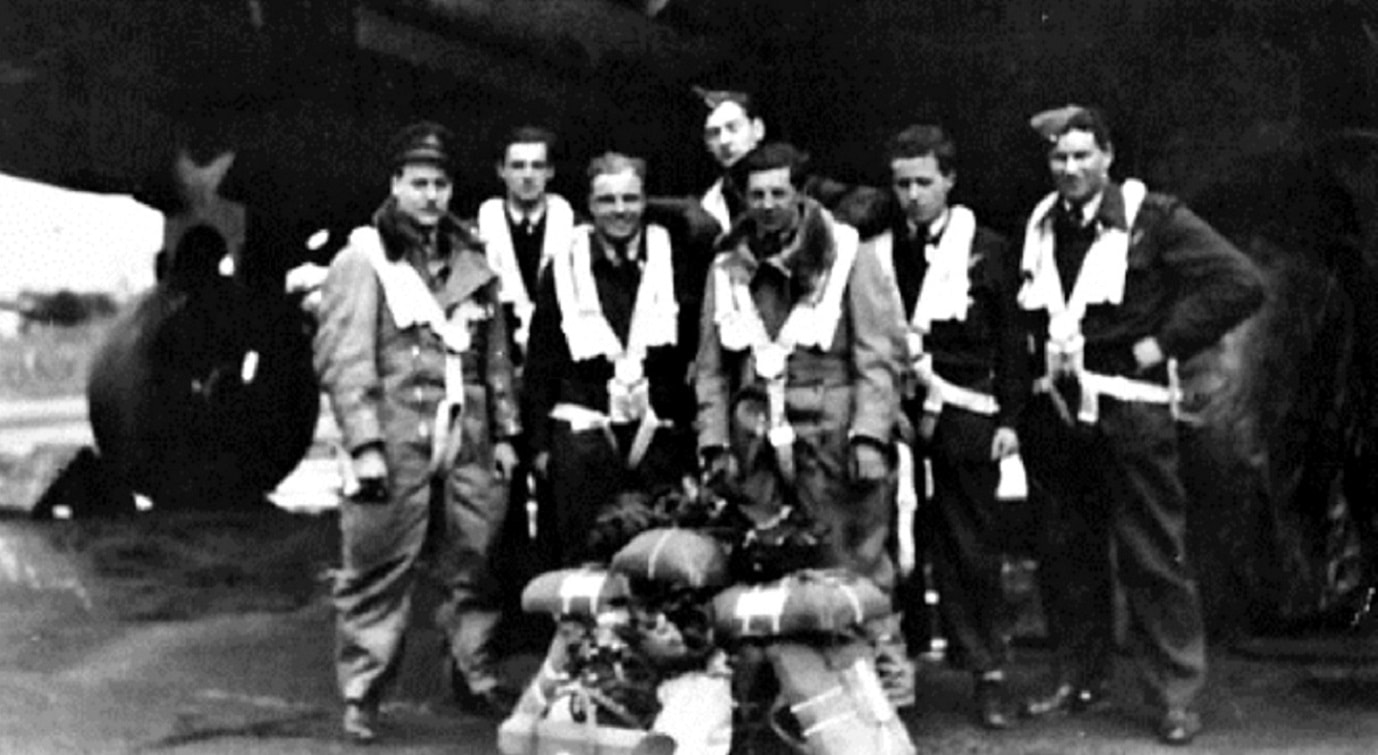
ZALOGA/ CREW MEMBERS, Lancaster Mk X, KB-726 VRA (od lewej/ from the feft),
Pat Brophy (Strzelec Ogonowy/Tail Gunner), Jim Kelly (Radio Operator/ Wireless Operator), Roy Vigars (Inzynier Pokladowy/ Flight Engineer), Art de Breyne (Pilot), Andrew Mynarski (Gorny Strzelec/ Mid Upper Gunner), Jack Friday (Operator Bomb, Bomb Aimer), Bob Bodie (Navigator)
Pat Brophy (Strzelec Ogonowy/Tail Gunner), Jim Kelly (Radio Operator/ Wireless Operator), Roy Vigars (Inzynier Pokladowy/ Flight Engineer), Art de Breyne (Pilot), Andrew Mynarski (Gorny Strzelec/ Mid Upper Gunner), Jack Friday (Operator Bomb, Bomb Aimer), Bob Bodie (Navigator)
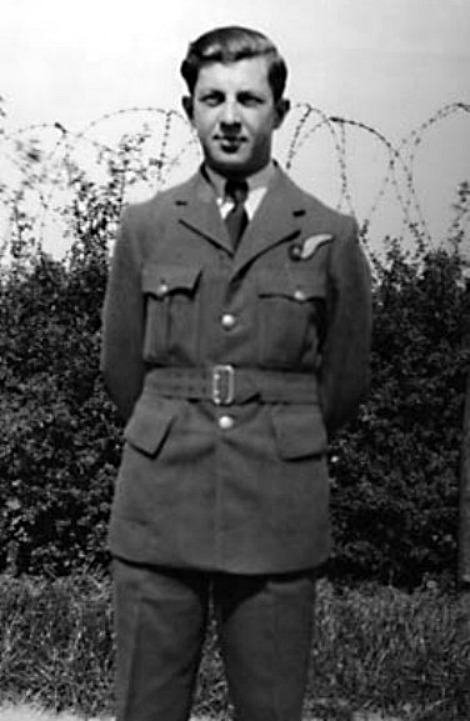
Andrew Mynarski 1916-1944
|
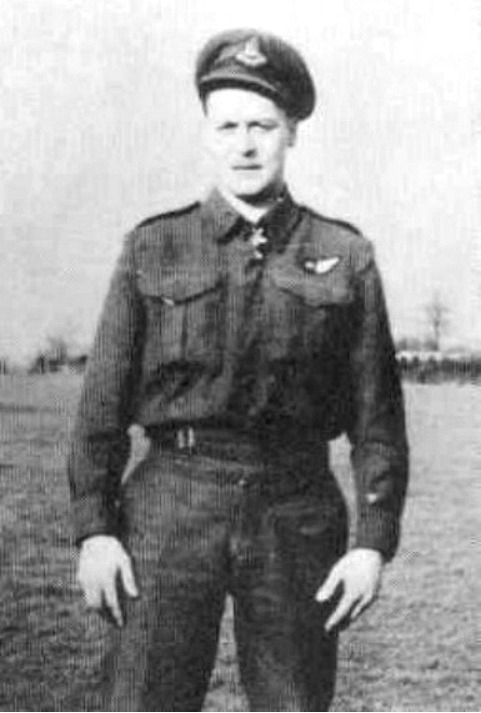
Pat Brophy 1915-1994
|
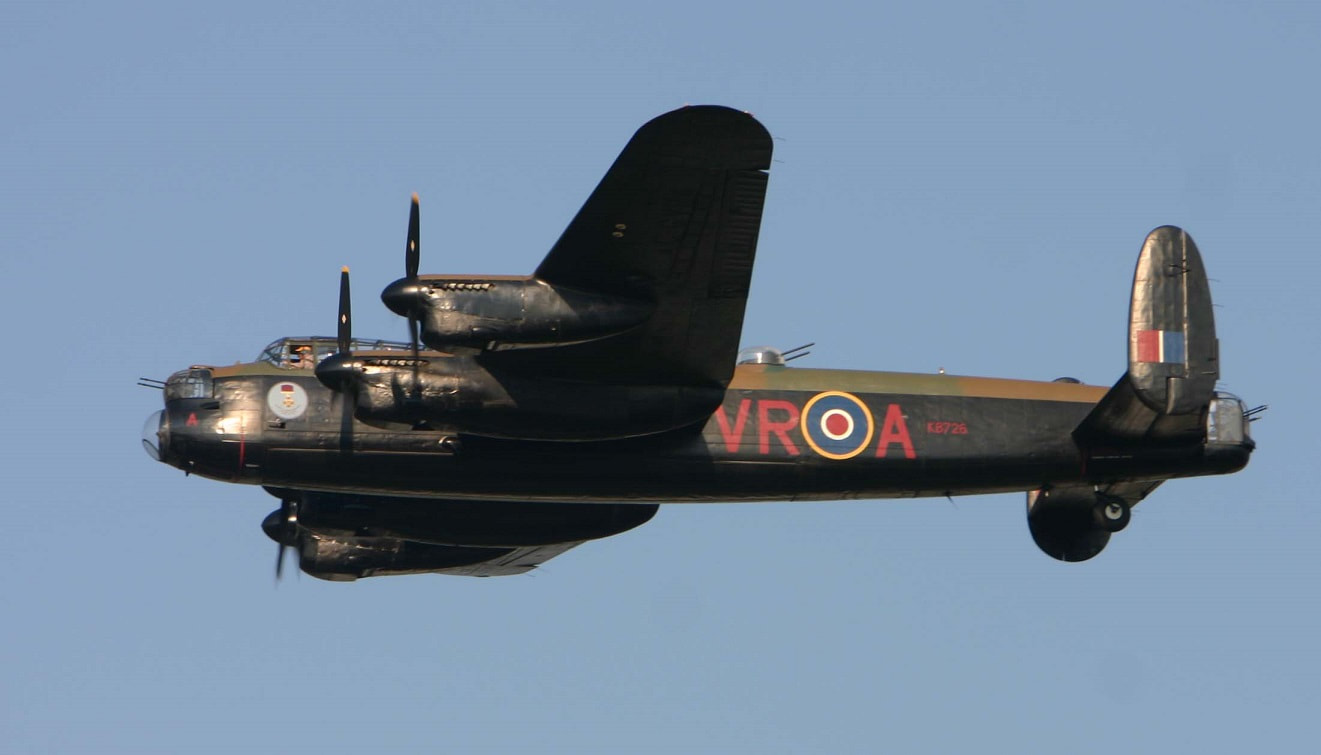
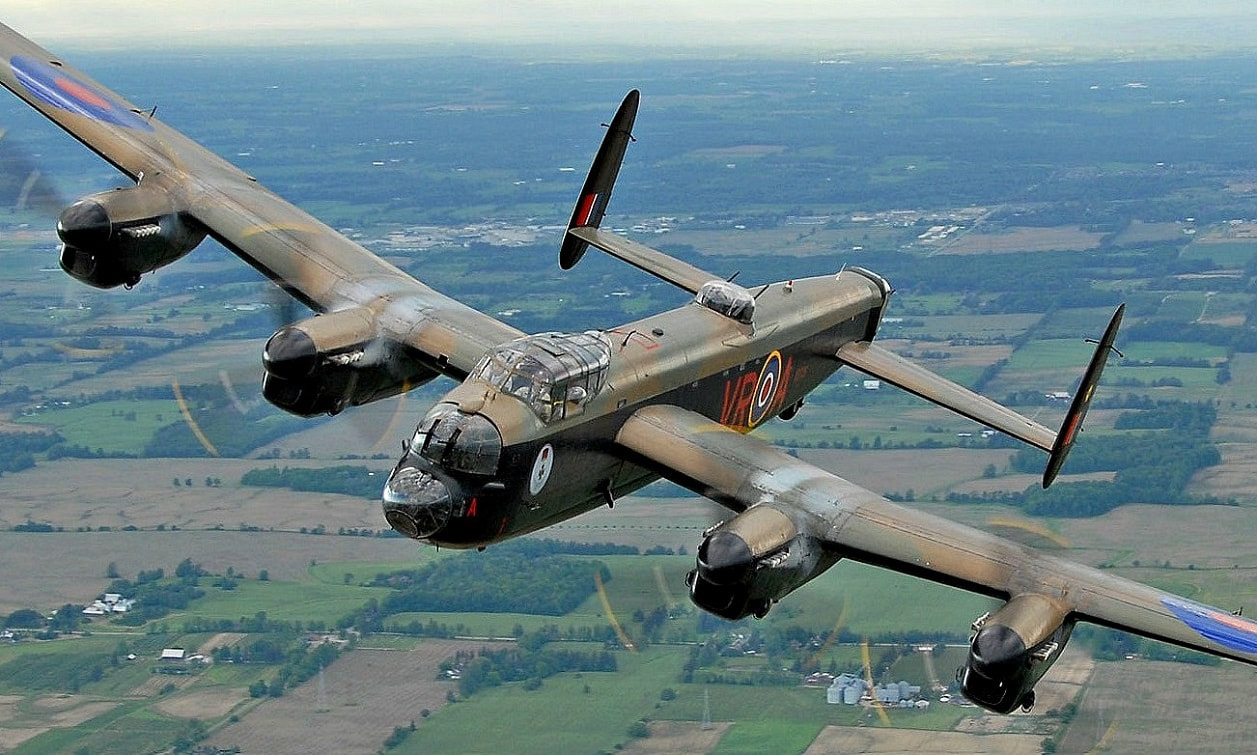
Mynarski Memorial Lancaster KB-726 VRA - Canadian Warplane Heritage Museum, Hamilton, Ont. Canada
Kanadyjskie Muzeum Samolotow Bojowych z Hamilton, Ont wykorzystujac ocalale czesci z innych egzemplarzy, odrestaurowalo bombowiec Lancaster Mk X numer FM 213, dedykujac go pamieci Mynarskiego i wszystkich tych ktorzy poprzez swoja odwage dali innym tak wiele. Lancaster ten posiada teraz oryginalne oznakowania bombowca Mynarskiego: KB-726 VR-A, Kanadyjskie Sily Powietrzne, Dywizjon 419 'Los'. Na kadlubie, ponizej kabiny pilota umieszczony jest takze owalny emblemat przedstawiajacy Krzyz Victorii i nazwisko Mynarski... Samolot ten jest duma muzeum i bierze udzial w wielu historycznych i lotniczych pokazach, jako jeden z dwoch zdolnych obecnie do latania Lancasterow na swiecie. (Drugi egzemplarz znajduje sie w Anglii). Muzeum wydalo takze ksiazkie autorstwa Betty Page 'Mynarski Lanc'.
The Canadian Warplane Heritage Museum from Hamilton, Ont has reconstructed the Lancaster Mk-X, FM-213 bomber from several other Lancasters and regularly fly it from their base at the Hamilton Airport, Ontario. The Museum produced a book 'Mynarski Lanc' by Betty Page and has titled the mentioned, reconstructed Lancaster 'Mynarski's Lanc'. This is the one of only two airworthy Lancs in the world. (The other one is in England). It is a flying tribute to the memory of Andrew Mynarski who symbolizes the bravery of all those who gave so much. The Lanc now bears the markings of the original Mynarski Lancaster: KB-726 VR-A. Also, the plane carries on its fuselage, just below the pilot cabin, the oval logo with the image of the Victoria Cross and Mynarski's name. VIDEO: The last seconds/ Ostatnie sekundy
The Canadian Warplane Heritage Museum from Hamilton, Ont has reconstructed the Lancaster Mk-X, FM-213 bomber from several other Lancasters and regularly fly it from their base at the Hamilton Airport, Ontario. The Museum produced a book 'Mynarski Lanc' by Betty Page and has titled the mentioned, reconstructed Lancaster 'Mynarski's Lanc'. This is the one of only two airworthy Lancs in the world. (The other one is in England). It is a flying tribute to the memory of Andrew Mynarski who symbolizes the bravery of all those who gave so much. The Lanc now bears the markings of the original Mynarski Lancaster: KB-726 VR-A. Also, the plane carries on its fuselage, just below the pilot cabin, the oval logo with the image of the Victoria Cross and Mynarski's name. VIDEO: The last seconds/ Ostatnie sekundy

|
|
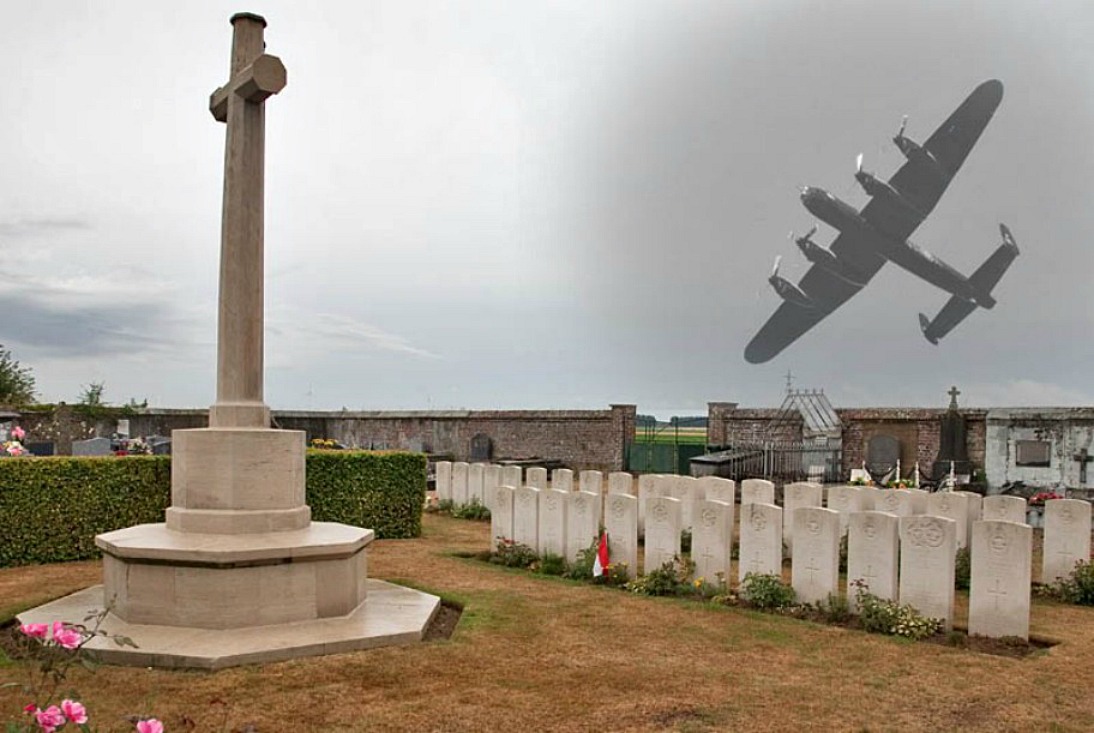
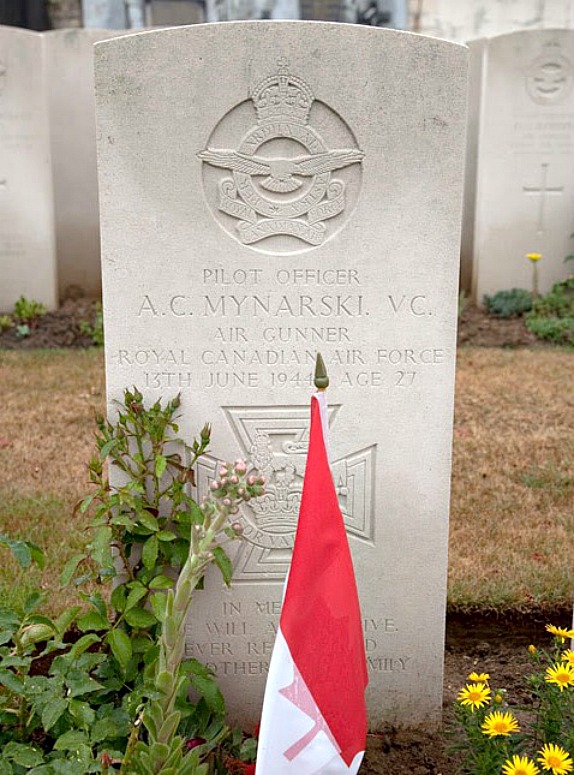
Andrew Mynarski pochowany zostal na malenkim wiejskim cmentarzu w Meharicourt, w polnocnej Francji. Oryginal jego odznaczenia, Krzyz Victorii mozna zobaczyc w siedzibie dowodctwa Kanadyjskich Sil Lotniczych w Winnipegu nalezacym do kanadyjskiej prowincji Manitoba. Nazwisko Mynarskiego przyjelo kilka szkol i roznych miejsc pamieci na terenie Kanady. Imieniem jego zostaly takze, miedzy innymi nazwane polaczone ze soba trzy jeziora w prowincji Manitoba. W 1973 roku Mynarski zostal wpisany na liste Kanadyjskich Slawnych i Zasluzonych Lotnikow, a w rodzinnym miescie Winnipeg utworzono 8 hektarowy park dla uczczenia jego pamieci.
Andrew Mynarski is buried in small village cemetery in Méharicourt, northern France. His Victoria Cross is on display in the entrance foyer at the Mynarski Memorial Room of the Air Command Headquarters in Winnipeg, Manitoba and his name is dedicated in various spots across Canada. Also a chain of three lakes in Manitoba has been named after him. In 1973 he was inducted into the Canadian Aviation Hall of Fame and his native city of Winnipeg has founded a large, 8 hectares park in his memory. VIDEO: Mynarski VC Vignette
Andrew Mynarski is buried in small village cemetery in Méharicourt, northern France. His Victoria Cross is on display in the entrance foyer at the Mynarski Memorial Room of the Air Command Headquarters in Winnipeg, Manitoba and his name is dedicated in various spots across Canada. Also a chain of three lakes in Manitoba has been named after him. In 1973 he was inducted into the Canadian Aviation Hall of Fame and his native city of Winnipeg has founded a large, 8 hectares park in his memory. VIDEO: Mynarski VC Vignette
|
Portrait of A. Mynarski by Polish Canadian artist Hanka Ratajczak
|
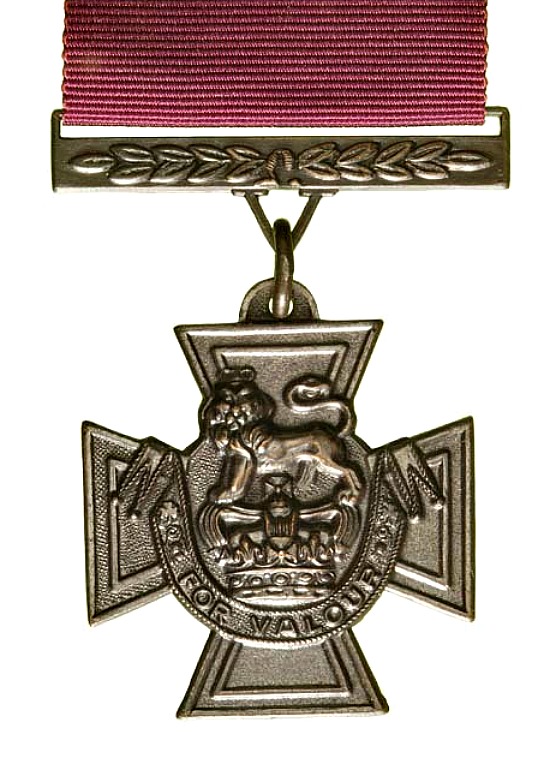
KRZYZ VICTORII – najwyzsze odznaczenie bojowe przyznawane przez Brytyjska Krolowa za niecodzienna i wyjatkowa odwage, walecznosc, honor i galanterie w obliczu bezposredniej walki z wrogiem. Jest to absolutnie szczegolne odznaczenie wsrod wszystkich innych.
THE VICTORIA CROSS (VC) - the highest military decoration which is, or has been, awarded for valor 'in the face of the enemy'. It takes precedence over all other orders, decorations and medals. It is usually presented to the recipient, or their next of kin, by the British monarch during an investiture held at Buckingham Palace, or by the Governor-General for awards made by other Commonwealth countries. It is the joint highest award for bravery in the United Kingdom with the George Cross, which is the equivalent honor for valor not in the face of the enemy. However, the VC is higher in the order of wear and would be worn first by an individual who had been awarded both decorations.
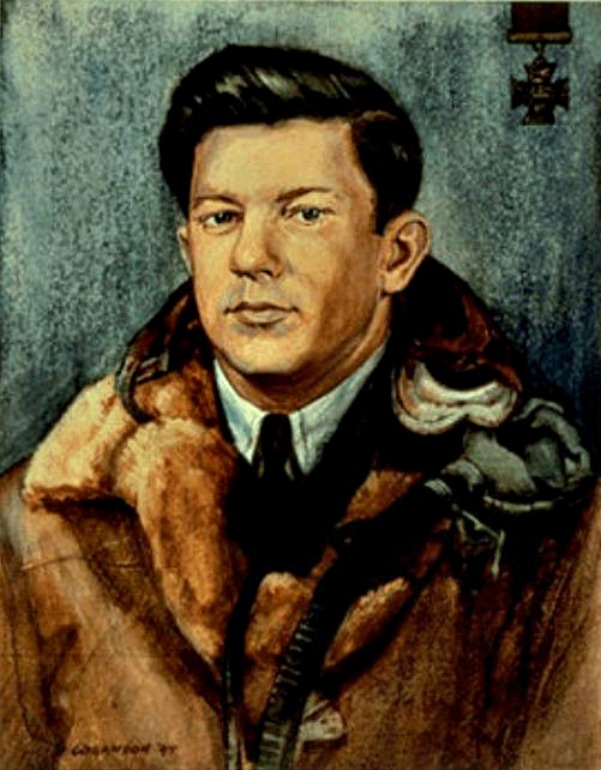
PORTRET ANDREW MYNARSKIEGO (olej na plotnie) autorstwa znanego kanadyjskiego malarza wojennego Paula Garansona (1911-2002). Portret ten zostal wykonany na zamowienie rzadu kanadyjskiego w 1947 roku w celu upamietnienia posmiertnego odznaczenia A. Mynarskiego Krzyzem Victorii; obecnie obraz jest w kolekcji Muzeum Wojny w Ottawie. Warto wspomniec, ze istnieje kilka kopii powyzszego portretu. Wszystkie wykonane przez kanadyjska artystke polskiego pochodzenia Hanka Ratajczak z Ottawy, ktora wspolpracuje z Kanadyjskim Muzeum Wojny. Wspomniane kopie stanowia czesc ekspozycji w innych muzeach, a takze w glownej siedzibie dowodctwa Kanadyjskich Sil Lotniczych w Winnipegu, Manitoba gdzie jedna z lotniczych eskadr bojowych jest nazwana imieniem Mynarski.
PORTRAIT OF ANDREW MYNARSKI (oil on canvas) by accomplished Canadian war artist Paul Goranson (1911-2002). This painting was commissioned by the government of Canada in 1947 to commemorate the event of awarding A. Mynarski with the Victoria Cross; currently in collection of the Canadian War Museum in Ottawa. Its interesting to mention there are a few copies of the above painting in existence. All are done by the Polish Canadian artist Hanka Ratajczak from Ottawa, who collaborates with the Canadian War Museum. The copies have been on display in other museums as well as at the headquarters of the Canadian Air Command, RCAF in Winnipeg, Manitoba where one of the squadrons is named after Mynarski.
Mynarski Memorial Lancaster KB-726 VRA - Canadian Warplane Heritage Museum, Hamilton, Ont. Canada
AVRO LANCASTER “LANC” byl najslawniejszym bombowcem Drugiej Wojny Swiatowej. Produkowany podczas wojny przez zaklady A.V. Roe (AVRO) w Anglii i Kanadzie (Te same kanadyjskie zaklady lotnicze w ktorych budowany byl ponaddzwiekowy Avro Arrow w latach '50). Zaprojektowany przez Roy Chadwick, Lancaster bral udzial prawie we wszystkich wazniejszych nalotach w Europie od polowy 1942 do konca wojny w 1945. Lancastery stanowily podstawe Brytyjskiego Dowodctwa Bombowcow. Braly one udzial w wiekszej liczbie akcji i zrzucily wiekszy tonaz bomb niz wszystkie pozostale brytyjskie bombowce razem wziete. Ze wzgledu na brak mozliwosci eskortowania Lancastera,
przy jego dlugich misjach, przez mysliwce, samolot ten byl silnie uzbrojony. Posiadal trzy wiezyczki strzelnicze: nosowa, gorna i ogonowa. Te trzy hydraulicznie wspomagane wiezyczki nie dawaly efektywnej obrony przed atakiem w ciagu dnia, aczkolwiek w warunkach nocnych
byly w stanie zapewnic skuteczna obrone.
Zaloga byla siedmio-osobowa: pilot, inzynier pokladowy, nawigator, operator bomb, radiotelegrafista, gorny strzelec, ogonowy strzelec. Stanowila ona grupe scisle wspolpracujacych ze soba specjalistow. Lancaster mogl z latwoscia latac na trzech silnikach, przy wykorzystaniu dwoch wciaz wykonywal stosunkowo plynne manewry, a w sytuacjach awaryjnych byl w stanie wracac do bazy tylko na jednym silniku. Ogolem, z tasm produkcyjnych zjechalo 7366 Lancasterow z czego 400 (model Mk X) wyprodukowanych bylo w Kanadzie. Tylko dwa z nich wciaz jeszcze moga latac. Dane Techniczne: Szybkosc: 460 km/godz, Pulap: 7470 m, Zasieg z bombami: 2656 km, Rozspietosc skrzydel: 31,1 m, Silniki: 4 x 1640 KM, Udzwig: 6,350-10,000 kg, Zaloga: 7.
THE AVRO LANCASTER “LANC” was the most famous allied bomber of World War II. Manufactured by A.V. Roe (AVRO) during the wartime in England and Canada (The Canadian production was done at the same plant where the Canadian supersonic Avro Arrow was built in '50). Designed by Roy Chadwick, the Lancaster took part in almost every major bombing raid of Europe from mid-1942 until the end of the war in 1945 becoming the backbone of the British Bomber Command. In fact, it flew more missions and dropped more bombs than all of the
other English heavy bombers combined. With fighters unable to escort the large aircraft on its long missions, it was heavily armed with nose, mid-upper and tail turret guns and didn't give much room for the seven-member crew. The three powers operated (hydraulic) turrets, it could not hold its own against determined daylight fighter attacks, but could deliver sufficient firepower to defend itself at night.
The seven crew (pilot, flight engineer, navigator, bomb aimer, wireless-operator, mid-upper and rear air gunners) were all specialists, trained to fly as a team. The "Lanc" could easily fly on three engines, could manage on two and limp away on one. In total, 7366 Lancasters rolled off the production lines (400 "Lanc" Mk X were built in Canada). Only two still fly. Specifications: Speed: 460 km/h, Ceiling: 7470m, Range w/ bomb load: 2656 km, Wing Span: 31,1 m, Powerplant: 4 engines x 1640 HP, Bomb load: 6,350-10,000 kg, Crew: 7
przy jego dlugich misjach, przez mysliwce, samolot ten byl silnie uzbrojony. Posiadal trzy wiezyczki strzelnicze: nosowa, gorna i ogonowa. Te trzy hydraulicznie wspomagane wiezyczki nie dawaly efektywnej obrony przed atakiem w ciagu dnia, aczkolwiek w warunkach nocnych
byly w stanie zapewnic skuteczna obrone.
Zaloga byla siedmio-osobowa: pilot, inzynier pokladowy, nawigator, operator bomb, radiotelegrafista, gorny strzelec, ogonowy strzelec. Stanowila ona grupe scisle wspolpracujacych ze soba specjalistow. Lancaster mogl z latwoscia latac na trzech silnikach, przy wykorzystaniu dwoch wciaz wykonywal stosunkowo plynne manewry, a w sytuacjach awaryjnych byl w stanie wracac do bazy tylko na jednym silniku. Ogolem, z tasm produkcyjnych zjechalo 7366 Lancasterow z czego 400 (model Mk X) wyprodukowanych bylo w Kanadzie. Tylko dwa z nich wciaz jeszcze moga latac. Dane Techniczne: Szybkosc: 460 km/godz, Pulap: 7470 m, Zasieg z bombami: 2656 km, Rozspietosc skrzydel: 31,1 m, Silniki: 4 x 1640 KM, Udzwig: 6,350-10,000 kg, Zaloga: 7.
THE AVRO LANCASTER “LANC” was the most famous allied bomber of World War II. Manufactured by A.V. Roe (AVRO) during the wartime in England and Canada (The Canadian production was done at the same plant where the Canadian supersonic Avro Arrow was built in '50). Designed by Roy Chadwick, the Lancaster took part in almost every major bombing raid of Europe from mid-1942 until the end of the war in 1945 becoming the backbone of the British Bomber Command. In fact, it flew more missions and dropped more bombs than all of the
other English heavy bombers combined. With fighters unable to escort the large aircraft on its long missions, it was heavily armed with nose, mid-upper and tail turret guns and didn't give much room for the seven-member crew. The three powers operated (hydraulic) turrets, it could not hold its own against determined daylight fighter attacks, but could deliver sufficient firepower to defend itself at night.
The seven crew (pilot, flight engineer, navigator, bomb aimer, wireless-operator, mid-upper and rear air gunners) were all specialists, trained to fly as a team. The "Lanc" could easily fly on three engines, could manage on two and limp away on one. In total, 7366 Lancasters rolled off the production lines (400 "Lanc" Mk X were built in Canada). Only two still fly. Specifications: Speed: 460 km/h, Ceiling: 7470m, Range w/ bomb load: 2656 km, Wing Span: 31,1 m, Powerplant: 4 engines x 1640 HP, Bomb load: 6,350-10,000 kg, Crew: 7
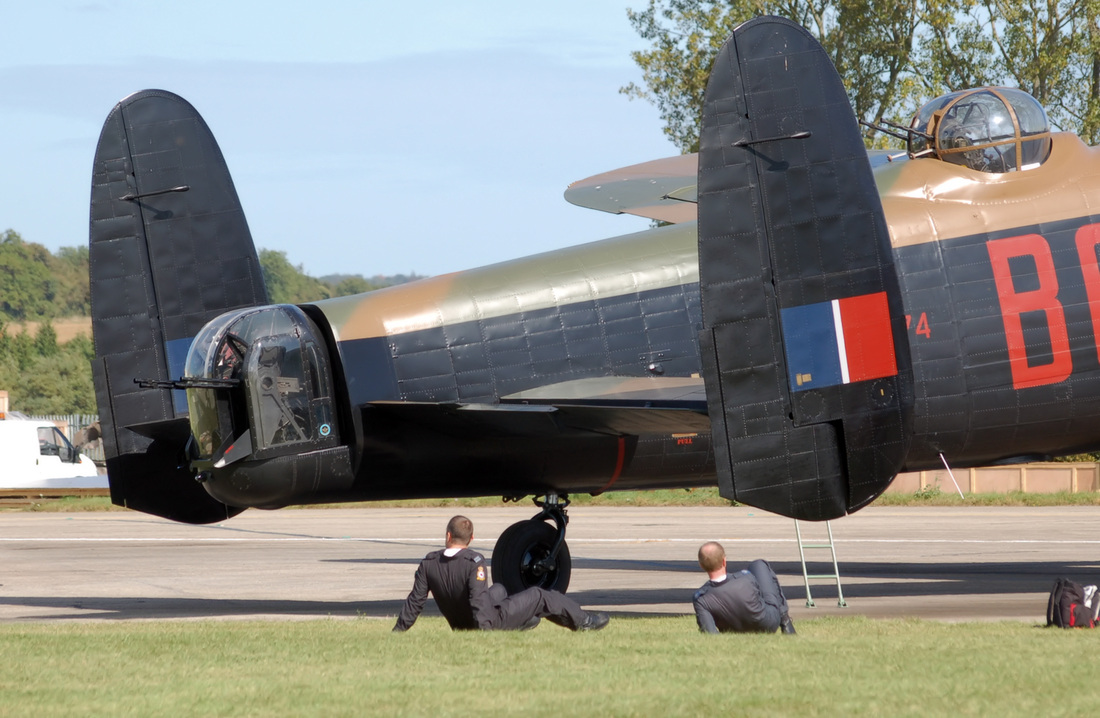
Avro Lancaster w powietrzu - niezwykle charakterystyczna sylwetka i odglos silnikow...
Avro Lancaster in the air - distinctive fuselage shape and engine humming...
CREDITS/ ZRODLA
Veterans Affairs Canada, National Defense Canada, Canadian Warplane Heritage Museum Hamilton Ont, Canadian Air Aces and Heroes, Web Site Nanton Lancaster Society Air Museum Calgary Canada, Hanka Ratajczak-Canada, Piotr Forkasiewicz-Poland
Avro Lancaster in the air - distinctive fuselage shape and engine humming...
CREDITS/ ZRODLA
Veterans Affairs Canada, National Defense Canada, Canadian Warplane Heritage Museum Hamilton Ont, Canadian Air Aces and Heroes, Web Site Nanton Lancaster Society Air Museum Calgary Canada, Hanka Ratajczak-Canada, Piotr Forkasiewicz-Poland

